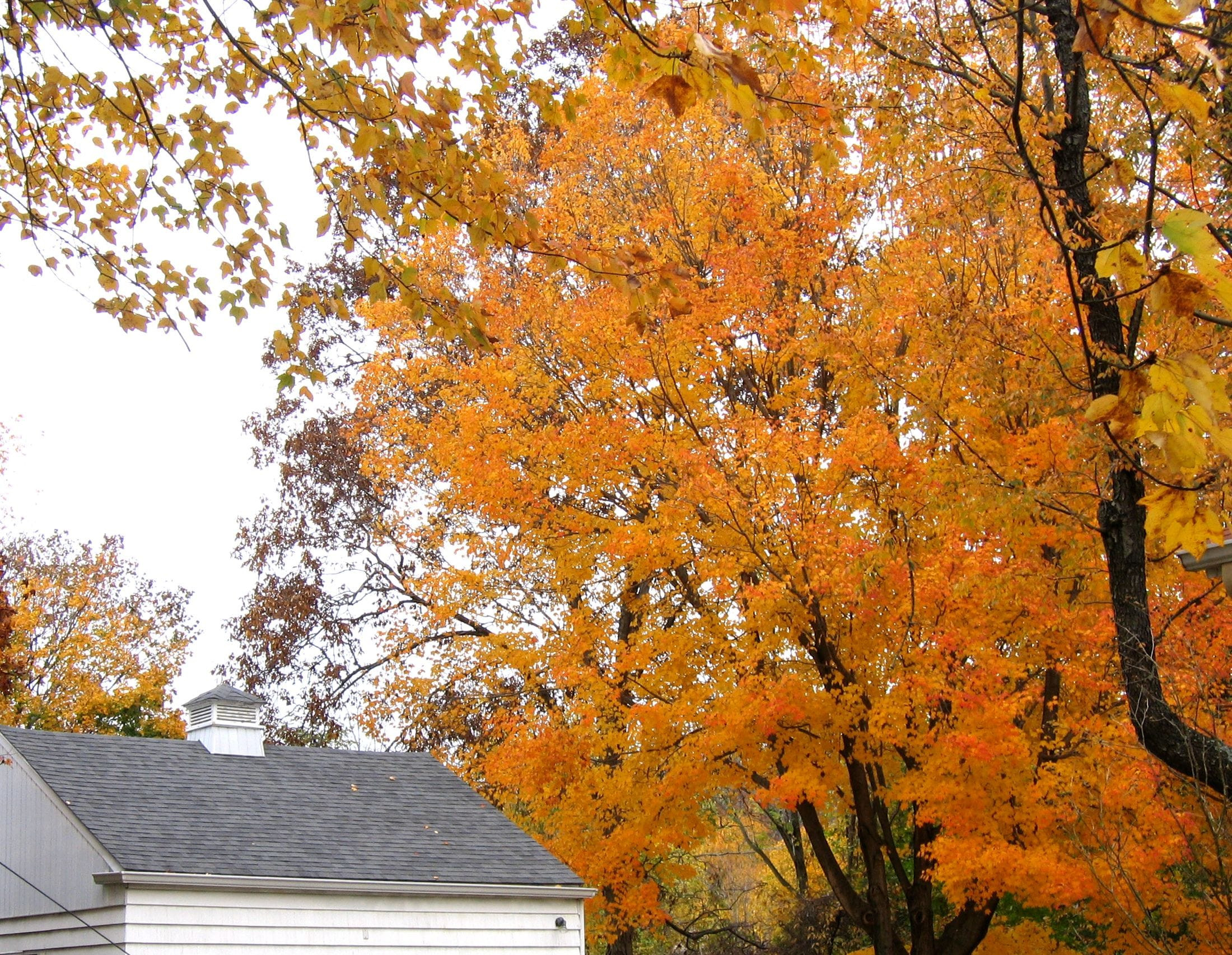
Fall in Minnesota is hard to beat. The trees turn brilliant shades of red, orange, and gold, temperatures become comfortable, and the Brainerd Lakes Area takes on an entirely different look.
Then those beautiful leaves come down.
Homeowners expect to rake leaves from the lawn and clean them out of gutters, but the leaves sitting on the roof itself are much easier to overlook. A handful of dry leaves blowing across the shingles usually is not a major concern. The problem begins when leaves accumulate and stay there.
Wet leaves can collect in roof valleys, pile up behind chimneys, gather beneath overhanging branches, and work their way into gutters. Instead of blowing away, that roof debris can retain moisture and interfere with the way water normally moves off the roof.
In Minnesota, timing adds another concern. Leaves that accumulate during fall may soon be covered by snow.
Understanding common leaves on roof problems can help homeowners decide what requires attention, what can wait, and when professional inspection may be appropriate.
Your roof is designed to shed water.
Rain lands on the roofing surface, travels down the slope, enters the gutters, and moves through downspouts away from the house.
Leaves can interfere with that process when they accumulate in the wrong places.
Dry leaves may blow away naturally. Wet leaves behave differently. They can stick together, flatten against roofing materials, and form dense layers that take longer to dry.
GAF specifically notes that accumulated wet leaves can make it more difficult for a roof to dry after rain and may contribute to mold or mildew and problems with shingle performance.
The concern is not that every leaf touching your roof causes damage. It is prolonged accumulation and moisture retention that deserve attention.
That distinction is important when planning fall roof maintenance.
One of the biggest concerns with accumulated leaves is moisture.
Think about a pile of leaves sitting on the ground after several rainy days. The surface may eventually dry, but underneath, the leaves can remain damp.
A similar situation can occur on a roof.
When wet leaves collect in a thick layer, the roofing materials underneath may stay damp longer than exposed sections of the roof.
This creates conditions where mold, mildew, moss, or other organic growth may become more likely.
Persistent moisture can also be especially concerning when the shingles underneath are already damaged, cracked, or deteriorated.
This is why roof moisture damage and debris often go hand in hand. The leaves themselves are not necessarily the primary threat. The bigger concern is the damp environment they can create.
Roof valleys are especially important areas to watch during fall.
A valley forms where two sloping sections of a roof meet. Its job is to channel water toward the roof edge and drainage system.
Because of their shape and location, valleys can also collect debris.
Leaves, pine needles, twigs, seeds, and other material can settle into these lower areas rather than blowing off the roof.
Clogged roof valleys can interfere with normal drainage and allow moisture to remain in an area that already handles significant amounts of water.
GAF identifies roof valleys as particularly vulnerable to leaf accumulation because they are lower areas where two roof planes meet. Wet leaves remaining in a valley can increase the potential for water infiltration.
From the ground, look for visible piles of leaves where roof sections intersect.
If a valley remains covered with debris after the rest of the roof has cleared, it deserves attention.
Even leaves that do not remain on the roof can cause trouble after they reach the edge.
Gutters are designed to collect runoff and move it toward downspouts. When leaves fill the gutter channel, water may not drain normally.
The result can include overflowing gutters, standing water, and drainage in areas where it was never intended to go.
A&M Roofing already has a detailed resource explaining how clogged gutters can affect a roofing system. For this reason, gutter cleaning should be viewed as one part of a larger fall roof-maintenance strategy.
Check for:
Gutters filled with leaves in October can become even more troublesome once temperatures begin dropping below freezing.
Minnesota homeowners have another reason to pay attention to leaf accumulation: winter does not give us much time.
GAF recommends removing accumulated leaves before the first snowfall because snow can trap them on the roofing surface for an extended period.
That is particularly relevant throughout the Brainerd Lakes Area.
Once snow arrives and remains on the roof, homeowners may not see the leaves underneath again until a thaw—or even spring.
Wet organic material trapped beneath snow can remain against the roofing surface while the roof experiences repeated periods of freezing, melting, and refreezing.
This makes leaf removal an especially useful part of Minnesota fall maintenance.
The goal is to give the roofing system a clean, unobstructed surface before winter begins.
Moisture and shade create favorable conditions for moss and other organic growth.
If your home is surrounded by mature trees, certain roof sections may receive very little direct sunlight. Those same trees can also deposit large quantities of leaves and debris onto the roof.
That combination can create areas that stay damp longer.
Moss is more than an appearance issue. Established moss can retain additional moisture against roofing materials and grow into areas around shingles.
If you already notice moss in the same areas where leaves regularly accumulate, addressing the conditions that keep those sections damp may be helpful.
That can include removing accumulated roof debris and evaluating nearby tree branches.
Avoid aggressive DIY cleaning methods such as pressure washing asphalt shingles. High-pressure cleaning can damage shingles and remove protective granules.
There is another simple problem with a roof covered in leaves: you cannot see what is underneath them.
Fall is an excellent time to visually check a roof for damage from summer storms. Minnesota thunderstorms can bring hail, high winds, and falling branches.
You may be looking for:
A thick layer of leaves can conceal those warning signs.
Clearing debris before winter makes it easier to assess the roof’s condition and determine whether any repairs should be considered.
A clean roof surface does not guarantee the roof is problem-free, but it makes obvious problems easier to identify.
If your roof is constantly covered with leaves, take a look above it.
Overhanging trees can contribute more than autumn leaves.
Branches may drop twigs, bark, nuts, pine needles, and other organic material throughout the year. Branches that actually touch the roof can rub against shingles when the wind moves them.
Weak or dead limbs also present a potential impact hazard.
The University of Minnesota Extension recommends removing dead branches and addressing weak branches that overhang homes or other areas where falling limbs could damage property.
That does not mean every branch over a roof needs to disappear.
Healthy trees are an important part of many Minnesota properties. The goal is reasonable maintenance and identifying obvious hazards.
Large branches and mature trees should be evaluated by qualified tree-care professionals rather than tackled as a DIY project.
Homes in wooded areas may need more frequent attention than properties with few nearby trees.
If mature trees surround your house, consider these fall roofing tips:
You do not necessarily need to remove every leaf the moment it lands.
Instead, focus on areas where leaves consistently accumulate and remain wet.
This is where fall maintenance can become dangerous.
Walking on a roof always carries fall risk. Wet leaves make the surface even more slippery, and they can hide the shingles beneath your feet.
GAF recommends using a roofing professional when leaf removal requires navigating the roof itself. Improper walking or aggressive tools can also potentially damage shingles.
Homeowners can still perform useful observations safely from the ground.
Walk around the house and use binoculars or a zoom camera to inspect:
If debris is concentrated in an area that cannot be reached safely, professional assistance is the better option.
Roof maintenance is not worth risking a serious fall.
Finding a pile of wet leaves does not automatically mean your roof is damaged.
Remove the debris safely and then evaluate the area.
Look for signs such as:
If everything appears normal, continued seasonal maintenance may be all that is necessary.
If you notice damage, persistent moisture, or signs of leaking, a professional inspection can help determine what is happening.
Leaf cleanup and roof inspection naturally fit together.
Once debris is removed, homeowners have an opportunity to evaluate how the roof made it through spring and summer before another Minnesota winter begins.
A fall inspection can include shingles, flashing, valleys, vents, gutters, roof penetrations, and other areas where moisture may enter.
This does not mean every fall inspection leads to a repair.
The purpose is information.
A roof in good condition may simply need routine maintenance. A roof with localized damage may need repair. Widespread deterioration or repeated problems may justify a conversation about replacement.
Knowing which situation applies before snow arrives is more useful than guessing.
Falling leaves are a normal part of autumn in Minnesota. Most will blow off your roof without creating a problem.
It is the leaves that do not leave that deserve attention.
When wet leaves collect in valleys, gutters, shaded areas, and behind roof projections, they can retain moisture and interfere with drainage. If they remain until snowfall, they may spend weeks or months trapped beneath winter precipitation.
For homeowners in the Brainerd Lakes Area, checking for accumulated leaves can be a simple but worthwhile part of fall roof maintenance.
Keep an eye on the areas where debris repeatedly collects. Maintain gutters and downspouts. Address hazardous branches. Look for moisture or roofing damage, and avoid climbing onto a wet or debris-covered roof.
Those basic habits can help your roofing system enter another Minnesota winter clean, visible, and ready to do its job.
A&M Roofing provides residential roofing services for homeowners in the Brainerd Lakes Area and the Metro, including roof assessments, repairs, storm-damage restoration, and roofing installation.
Homeowners with questions about leaves on roof problems, fall maintenance, suspected damage, or the overall condition of a roofing system can reference A&M Roofing’s educational resources or contact the company directly.
Brainerd Lakes Area
Phone: 218-821-9945
Email: Tim@AandMRoofs.com
Metro
Phone: 763-310-7037
Email: Chance@AandMRoofs.com