Minnesota roofs live a harder life than most. They face long winters, quick-thaw springs, humid summers, and the occasional windstorm that seems personally offended by your shingles. In places like the Brainerd Lakes region and across central Minnesota, a roof isn’t just a cap on a house—it’s a year-round shield that has to perform through snow load, ice dams, sun, hail, and temperature swings.
This reference-style guide explains the essentials of residential and light commercial roofing in Minnesota, using A&M Roofing as a local example of service scope and regional expertise. You’ll find clear explanations of roof inspections, repair vs. replacement decisions, storm damage restoration, and the practical meaning of manufacturer certifications. The goal is simple: help homeowners and property managers understand the process and vocabulary well enough to make calm, informed choices.
A roof in Arizona mostly fights sun. A roof in Minnesota fights everything.
Here are the local conditions that shape roofing decisions:
Freeze–thaw cycles: Water finds tiny openings, freezes, expands, and gradually pries materials apart.
Snow load: Accumulated snow adds weight and keeps shingles cold and wet for long periods.
Ice dams: These happen when roof surfaces vary in temperature; snow melts higher up and refreezes at eaves, forcing water backward under shingles. Minnesota agencies and the University of Minnesota emphasize that ice dams are more about attic heat and air leaks than “bad shingles.”
Hail and high wind events: Central Minnesota gets regular hail seasons and straight-line winds that can lift, crack, or bruise roofing materials.
Short construction windows: Roof work often concentrates into spring–fall, meaning scheduling and readiness matter.
Because of that mix, a durable roof here is less about one “perfect” material and more about correct system design, ventilation, installation quality, and ongoing maintenance.
A&M Roofing describes itself as a family-owned Minnesota contractor with 30+ years of experience, serving Merrifield, Brainerd Lakes, Crow Wing and Aitkin Counties, plus the Twin Cities Metro. Their service lineup matches what most Minnesota homeowners need over a property’s lifetime.
A good inspection is half detective work, half preventive medicine. It typically focuses on:
Shingle condition (curling, cracking, missing tabs)
Flashing around chimneys, vents, skylights, and valleys
Granule loss and bruising (often from hail)
Nail pops or exposed fasteners
Soft decking spots that hint at trapped moisture
Attic ventilation and insulation signals
Evidence of leaks: stains, mold, frost buildup in winter
Inspections matter most after big weather events and before major decisions like selling, refinancing, or planning a remodel.
Repairs aim to restore function without replacing the whole system. In Minnesota, common repair triggers include:
Localized wind damage
Hail impacts limited to one roof plane
Pipe boot or flashing failures
Ice dam leak spots near eaves
Small areas of rot around vents or previous patchwork
Repairs can be a smart play when the roof is structurally sound and not near the end of its lifespan. But patching a roof that’s already exhausted is like taping an old coat: it works, until it doesn’t.
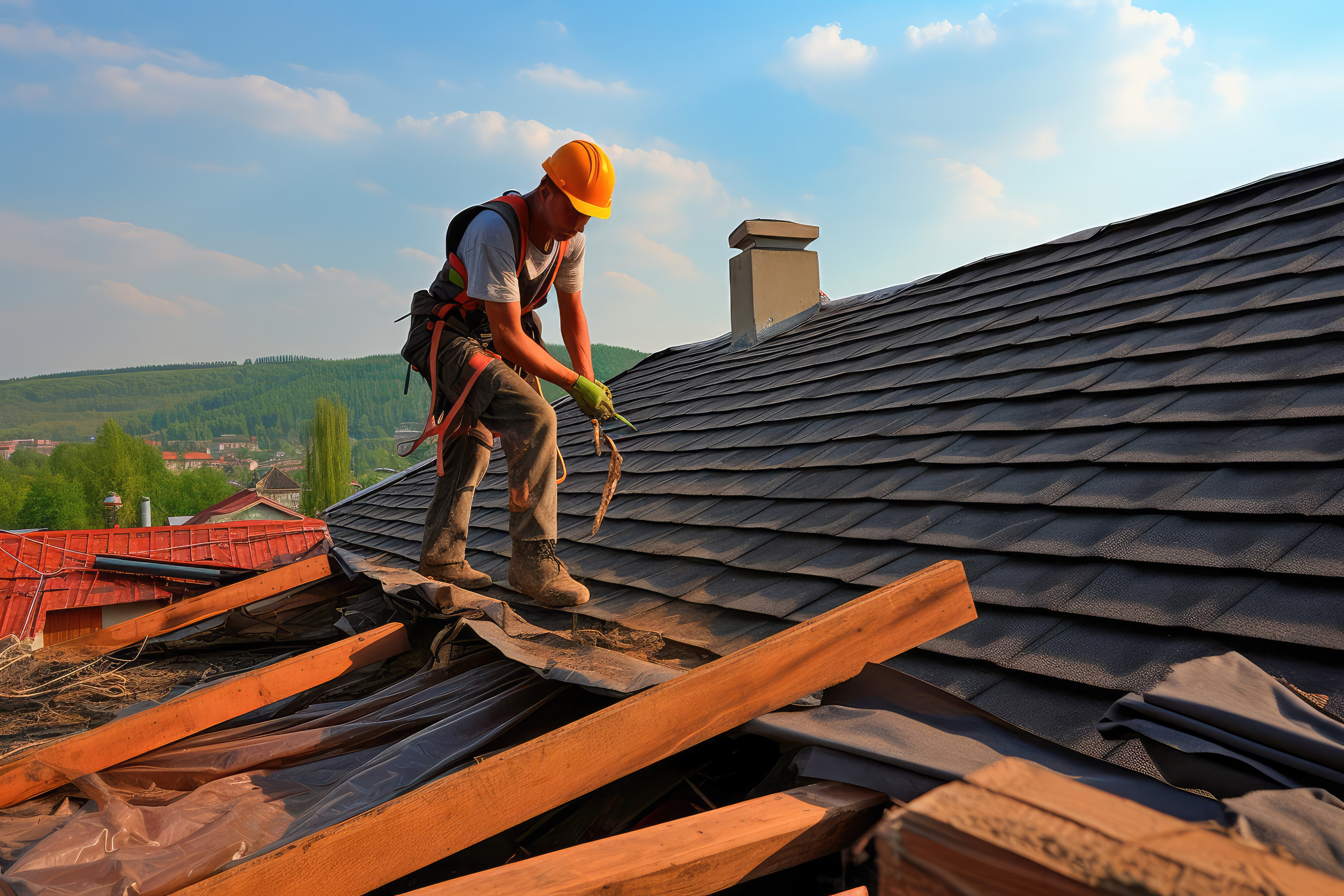
Replacing a roof is more than swapping shingles. It’s rebuilding a layered system. A&M highlights full installations and replacements as a major part of their residential work.
A replacement often includes:
Tear-off of old materials
Deck inspection and repair
Underlayment and leak barrier upgrades
Starter strips and proper edge detailing
Ventilation balancing
New shingles and ridge caps
Cleanup and magnetic nail sweep
Minnesota owners often replace roofs because of storm damage, age, or chronic ice-dam leakage.
Storm restoration is its own category because it blends construction with documentation and timing. A&M Roofing emphasizes rapid assessments after hail or wind events, plus support through insurance claims.
The restoration workflow usually looks like:
Damage assessment with photos and test squares
Short-term protection (tarping or temporary sealing if needed)
Insurance coordination and adjuster meetings
Scope approval based on covered damage
Repair/replacement scheduling
Final inspection and documentation
For homeowners, the biggest value here is clarity: what’s actually damaged, what’s cosmetic vs. functional, and what should be repaired now to avoid compounding harm.
In storm-heavy regions, insurance assistance becomes a practical service. A&M positions itself as experienced in handling claims and working directly with insurers.
That help can include:
Organizing evidence of damage
Explaining repair scopes in insurer language
Ensuring code upgrades (like ice-barrier requirements) are considered
Reducing back-and-forth for the homeowner
Even when coverage is straightforward, the paperwork and timelines can be tiring. Having a contractor fluent in that side of the process makes the experience less jagged.
This decision is rarely emotional for roofers, but it is for homeowners—because it’s a big spend and the damage is often invisible from the street.
A grounded way to evaluate:
Repair makes sense when:
Damage is clearly localized
The roof is relatively young
Shingles can be matched reasonably
Ventilation and decking remain healthy
There are no repeating leak patterns
Replacement makes sense when:
Damage affects multiple planes or a large percentage
Shingles are brittle, cupped, or heavily granule-lost
Multiple repairs have already happened
Ice-dam or ventilation issues are persistent
The roof is near or past expected service life
In Minnesota, the “ice-dam pattern” is a key tell: if you see recurring leaks at eaves over multiple winters, you may need more than surface repairs. Often the fix is a combination of roof detailing plus attic sealing/insulation that prevents the temperature mismatch that creates dams.
A&M highlights GAF roofing systems and explains that a roof is not just shingles but multiple coordinated layers.
A standard asphalt shingle system includes:
Roof deck: Structural base, usually plywood or OSB
Leak barriers: Especially at eaves in ice-dam regions
Underlayment: Secondary water shedding
Starter strips: Seal the first edge, prevent wind lift
Field shingles: The visible armor layer
Ridge caps: Protect ridges and hips
Ventilation: Intake/exhaust balance to keep attic temps stable
If one layer is weak—poor ventilation, missing ice barrier, sloppy flashing—the whole system loses years of life.
A&M Roofing is listed as a GAF Certified Plus™ contractor, a designation they note is held by a small fraction of contractors.
From the manufacturer side, GAF explains that certification involves licensing/insurance requirements (where applicable), experience, and quality signals like customer reviews. Certifications indicate the contractor has met training and business standards and may be able to offer stronger warranty options.
For homeowners, the practical takeaway is not “certified equals perfect,” but rather:
the contractor has documented experience with that system,
the manufacturer recognizes them as aligned with installation standards,
and your roof may qualify for enhanced warranty coverage if installed to spec.
It’s one useful trust marker among others like local reputation, inspection thoroughness, and clarity of scope.
If Minnesota had an unofficial roof nemesis, it would be the ice dam.
State and university resources underline two core truths:
ice dams form when heat escapes into the attic and melts snow unevenly, and
they’re more about air sealing, insulation, and ventilation than about a “bad roof.”
Practical steps commonly recommended:
Seal attic air leaks (top plates, light fixtures, exhaust fans)
Increase insulation to slow heat transfer
Ensure balanced ventilation so roof temps stay consistent
Use proper ice-and-water barriers at eaves during reroofing
Remove excess snow safely after heavy storms
When a roof is being replaced, it’s a good moment to upgrade eave protection and ventilation design so future winters are gentler on the house.
You don’t need to climb a ladder to stay alert. Many issues announce themselves softly first.
Look for:
Shingles missing after windstorms
Dark streaks or bald spots on shingles
Granules piling in gutters
Sagging roofline or soft spots
Water stains on ceilings or in attic
Icicles forming thickly at eaves each winter
Interior draftiness or frost in attic
Flashing that’s lifted or rusting
If two or three of these appear together, it’s usually time for a full inspection, even if you aren’t seeing an active leak.
Roofing isn’t only a reaction to disaster. In a climate like Minnesota, small maintenance moments can buy years.
Typical low-drama maintenance includes:
Clearing gutters and downspouts
Trimming branches that scrape shingles
Checking attic vents for blockage
Re-sealing small flashing gaps early
Monitoring moss or algae growth in shaded areas
Doing a quick check after hail or extreme wind
A roof is a slow-moving system. Most “sudden” failures are really long stories that were whispering for a while.
A roof replacement or storm repair can feel like a single event, but in Minnesota it’s better understood as part of long-term home stewardship. Weather here is not subtle. It rewards roofs that are well-built, multi-layered, ventilated correctly, and inspected before little problems become lyric tragedies.
A&M Roofing’s positioning—local, long-tenured, storm-repair-savvy, and GAF-certified—reflects the kind of expertise that Minnesota properties often need.
Whether you’re a lakes-area cabin owner watching winter drift up the eaves, a Brainerd homeowner looking at an aging shingle field, or a metro property manager juggling storm seasons, understanding the basics makes the whole process calmer. The roof doesn’t need to be a mystery. It just needs to do its job—quietly, faithfully, through every season.