When an asphalt shingle roof reaches the end of its useful life, homeowners typically picture the same process: the old shingles come off and a completely new roofing system goes on.
But is removing the existing shingles always necessary?
Not necessarily.
In certain situations, it is possible to install a new roof over existing shingles. The process is often called a roof overlay or re-roof. Instead of removing the original asphalt shingles, the roofing contractor prepares the existing surface and installs another layer of shingles over it.
At first glance, an overlay can sound appealing. There is less material to remove, less waste to dispose of, and potentially less labor involved. However, installing new shingles over old shingles comes with important limitations.
The condition of the existing roof, number of roofing layers, local building requirements, condition of the roof deck, manufacturer installation instructions, and reason the roof needs replacement all have to be considered.
For some homes, an overlay may be technically possible. For others, a complete roof tear-off and replacement provides important advantages that an overlay simply cannot offer.
Here is what Minnesota homeowners should understand before making the decision.
A roof overlay involves installing new roofing material directly over an existing roof covering rather than removing the old material first.
For a typical asphalt shingle home, that generally means installing a second layer of asphalt shingles over the first.
A complete roof replacement works differently. The contractor removes the existing roofing materials, exposing the roof deck beneath them. This allows the decking to be inspected and repaired as necessary before the new roofing system is installed.
That difference is significant.
The visible shingles are only one part of a roofing system. The decking, underlayment, leak barriers, flashing, ventilation, starter shingles, ridge components, and other materials all contribute to the roof’s performance.
Covering the existing shingles means some of those underlying components cannot be evaluated as thoroughly as they can during a complete tear-off.
Sometimes.
GAF states that its asphalt shingles can be installed over certain existing roofing materials when appropriate installation requirements are followed. However, the existing roof must meet specific conditions.
One of the first considerations is the number of roofing layers already present.
If a house already has multiple layers of roofing, another layer generally should not simply be added. GAF notes that most local codes do not allow more than two roof layers on a residence and recommends a complete tear-off when more than one existing roof is already in place.
Local building requirements ultimately matter, so homeowners should never assume that an overlay is automatically permitted.
The roofing manufacturer’s requirements also need to be followed.
Installing beautiful new shingles over a badly deteriorated roof does not fix what is underneath them.
For an overlay to work properly, the existing roof needs to provide an adequately smooth and stable surface.
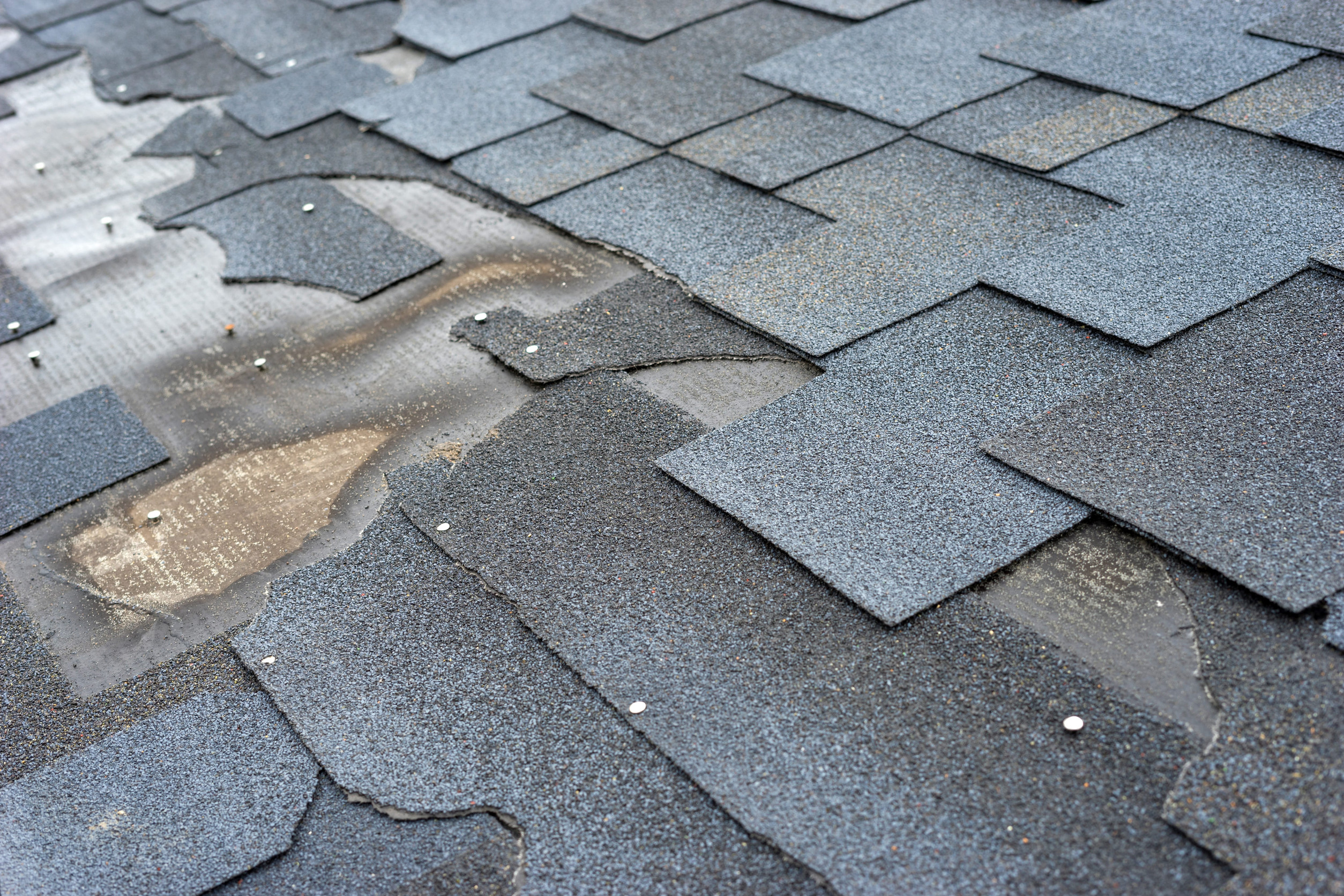
That becomes difficult when old shingles are:
GAF specifically identifies badly warped, curled, or weathered shingles as a reason a complete tear-off may be appropriate.
Why?
New asphalt shingles need a suitable surface beneath them. If the first layer is badly distorted, those irregularities can affect how the new roofing materials lie and perform.
A roof overlay should not be viewed as a method of hiding severe deterioration.
This is one of the strongest arguments for removing old roofing materials.
The roof deck provides the structural surface beneath the roofing system. Asphalt shingles and other roofing components ultimately depend on that deck for support and attachment.
During a complete tear-off, the old roofing material is removed and the decking becomes visible.
A roofing contractor can then identify problems such as deterioration or moisture-related damage and determine whether portions of the deck require replacement.
With an overlay, that same visual inspection is not possible across the entire roof because the existing shingles remain in place.
This becomes especially important when a roof has experienced extensive leaking.
If water has penetrated the roofing system over time, covering everything with another layer of shingles could leave damaged decking hidden underneath.
GAF recommends removing the existing roof when there are concerns about deck deterioration so the underlying surface can be properly inspected.
There is a reason homeowners ask about installing shingles over shingles.
An overlay can offer several potential advantages when the existing roof is an appropriate candidate.
Removing thousands of pounds of old roofing material requires time and labor.
An overlay eliminates much of the tear-off process, potentially reducing the amount of labor required for that portion of the project.
A complete tear-off creates a substantial amount of construction debris.
Old shingles, underlayment, nails, and other materials must be removed from the property and disposed of appropriately.
Leaving the existing shingles in place reduces the amount of material immediately going to disposal.
Because an overlay can reduce tear-off labor and disposal requirements, the initial project cost may sometimes be lower than a complete tear-off.
However, upfront cost should not be the only consideration.
Homeowners should compare the immediate savings against the condition of the existing roofing system and the long-term advantages of exposing and inspecting the roof deck.
The drawbacks deserve just as much attention as the potential savings.
Perhaps the most important concern is what you cannot see.
Removing old shingles provides direct access to the roof deck. Leaving them in place means hidden deterioration may remain hidden.
If there has been significant leaking or other reason to suspect moisture damage, this becomes particularly important.
A new roof performs best when installed over an appropriate surface.
Old curled, buckled, or deteriorated shingles may create an uneven foundation. Those imperfections can potentially affect the appearance and installation of the new shingles.
A second layer of shingles adds additional material to the roofing structure.
The suitability of that additional load is something a roofing professional can evaluate as part of determining whether the property is an appropriate candidate for an overlay.
An overlay does not eliminate tear-off forever.
When the second layer eventually needs replacement, both roofing layers will need to be addressed. That means the eventual project can involve considerably more material removal.
A new layer of shingles can improve the exterior appearance of a roof, but appearance does not tell you what is happening underneath.
If the old roofing system contains deteriorated materials, covering those materials does not automatically correct the underlying problem.
Although every property should be evaluated individually, several conditions strongly favor removing the old roofing materials.
A complete roof tear-off may be appropriate when:
The key principle is simple: a new roofing system needs a sound foundation.
If there are questions about that foundation, removing the existing materials provides an opportunity to see what is actually happening underneath.
Consider what happens during a complete roof replacement.
Once the old shingles and other necessary materials are removed, the roofing contractor can see the decking.
This is valuable because roof deck deterioration is not always obvious from inside the attic or from looking at shingles outside.
GAF notes that roofers cannot always predict decking repairs before tear-off because the deck may not be visible. If moisture has weakened the decking, the damaged material should be addressed before new roofing components are installed.
That gives homeowners a better opportunity to start the new roofing system with a solid structural surface beneath it.
A history of significant leakage should make homeowners particularly cautious about an overlay.
Water can travel.
The place where water appears inside a home is not necessarily directly beneath the location where it entered the roofing system. Moisture can move along decking, rafters, insulation, and other materials before becoming visible.
If a roof is being replaced because of extensive or recurring leaks, removing the existing shingles can provide an opportunity to investigate what has happened underneath them.
Simply covering a moisture problem does not repair it.
The source of water intrusion and any resulting damage should be addressed as part of the roofing project.
Minnesota roofs work hard.
A roofing system in the Brainerd Lakes Area or Twin Cities Metro may experience heavy snow, ice, freezing temperatures, spring melting, summer heat, thunderstorms, hail, high winds, and dramatic temperature changes.
Those conditions make proper roof installation and water management especially important.
Ice barriers, underlayment, flashing, ventilation, decking condition, and shingles all work together as parts of a complete roofing system.
For that reason, Minnesota homeowners considering a roof overlay versus tear-off should look beyond the visible shingles.
The question is not simply, “Can another layer fit on my roof?”
A better question is:
What approach gives this particular home an appropriate roofing system for its current condition?
Warranty requirements should be reviewed before deciding how a new roof will be installed.
Roofing manufacturers establish specific installation requirements for their products, and different warranties may have different eligibility requirements.
A&M Roofing is a GAF Certified™ Contractor and is authorized to offer the GAF System Plus Limited Warranty. When considering any new roofing system, homeowners should discuss which warranty applies, what installation requirements must be met, and whether the proposed roofing method affects available coverage.
Never assume warranty coverage will be identical between an overlay and a complete roofing system replacement.
Ask before installation and keep the applicable warranty documentation afterward.
The answer starts with an inspection.
Before deciding between installing a new roof over existing shingles and completing a tear-off, the existing roofing system should be evaluated.
Important questions include:
The answers can be different from one house to another.
That is why there is no responsible universal “yes” or “no” answer to the overlay question.
A lower initial roofing estimate can certainly be attractive, but price should be considered alongside what the project actually includes.
If one proposal involves an overlay and another involves removing the old roofing system, inspecting the decking, addressing damaged materials, and installing a complete new system, the two estimates are not directly equivalent.
Homeowners should compare scope as well as price.
Ask what is being removed, what is being inspected, what materials are being installed, what happens if damaged decking is discovered, what warranty applies, and how the project addresses the existing roof’s condition.
Understanding those details creates a much more meaningful comparison.
Yes, installing a new roof over existing shingles can sometimes be possible, provided the roof meets the appropriate conditions and the installation complies with applicable codes and manufacturer requirements.
But possible does not always mean preferable.
A roof overlay may reduce initial tear-off labor, disposal, and project costs. At the same time, it limits the ability to expose and inspect the entire roof deck and may not be suitable when existing shingles are badly deteriorated, multiple roofing layers are already present, or moisture damage is suspected.
A complete tear-off gives roofing professionals direct access to the deck and creates an opportunity to address underlying problems before the new roofing system is installed.
For Minnesota homeowners, the best choice should be based on the actual condition of the home—not simply on which option appears less expensive at first.
A careful inspection and a clear understanding of both approaches can help determine which roofing solution makes sense for the property.
Homeowners with questions about roof replacement, existing shingles, roof condition, storm damage, or residential roofing options can contact A&M Roofing for additional information.
A&M Roofing is a family-owned residential roofing company with more than 30 years of industry experience and serves homeowners in the Brainerd Lakes Area and Metro.
Brainerd Lakes Area
Phone: 218-821-9945
Email: Tim@AandMRoofs.com