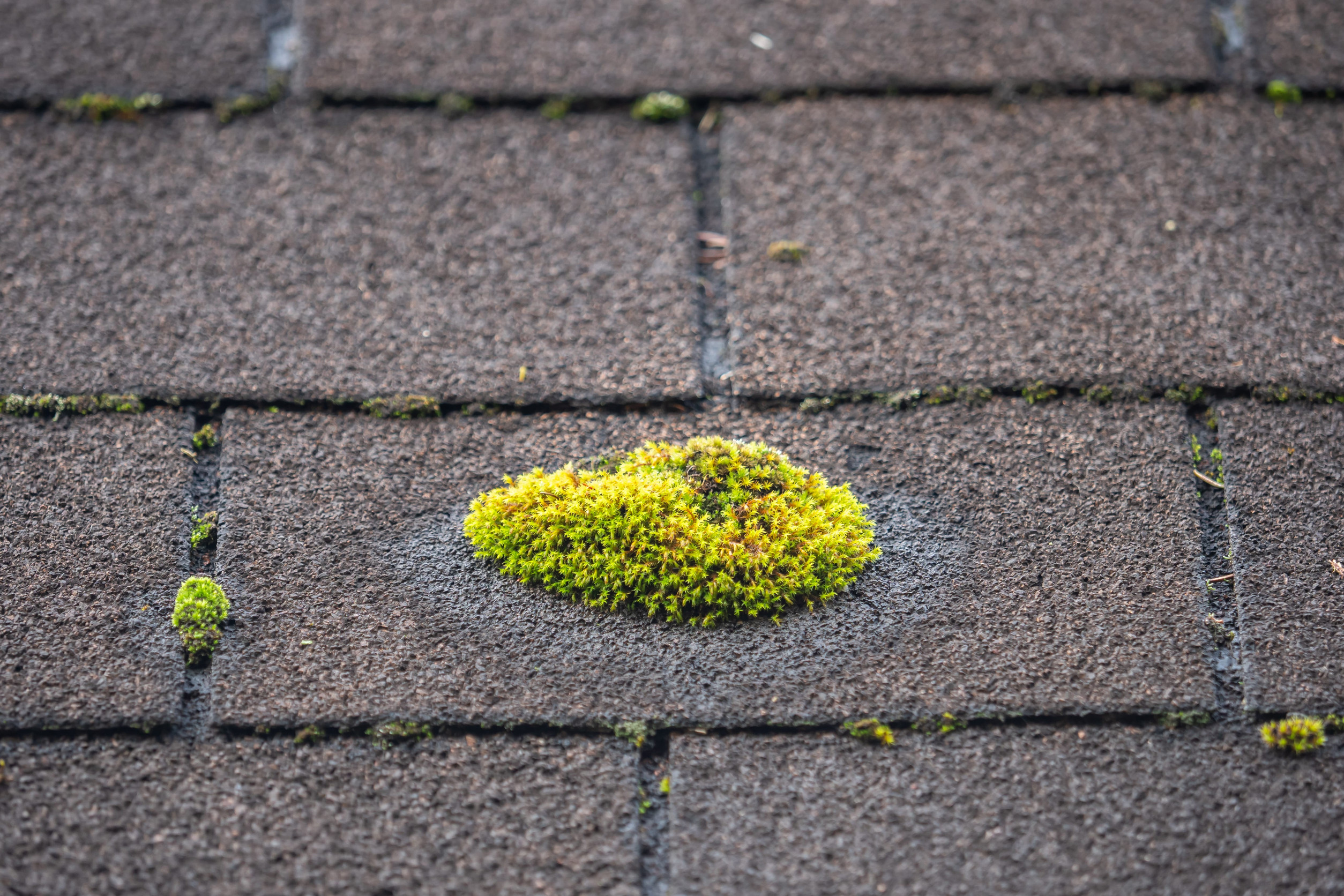
A little patch of green moss can seem harmless. On a cabin surrounded by trees or an older home in a wooded neighborhood, it may even appear to add character. Unfortunately, moss on your roof is more than an aesthetic concern.
Moss is a living plant that thrives where moisture and shade are readily available. Unlike an ordinary stain on roofing materials, moss can grow into a thicker layer that retains moisture against the roof surface. As it becomes established, growth may extend around and beneath the edges of shingles. Over time, those conditions can contribute to deterioration and make it more difficult for a roofing system to perform as intended.
That does not mean discovering a small amount of roof moss automatically means you need a new roof. The significance of moss growth depends on several factors, including how extensive it is, how long it has been present, the condition and age of the shingles, and whether moisture-related damage has already occurred.
For homeowners throughout Minnesota, including the Brainerd Lakes Area and Twin Cities Metro, understanding roof moss growth is especially useful because our changing seasons can expose roofing systems to moisture, snow, ice, freeze-thaw cycles, storms, and extended periods of shade.
Here is what homeowners should know.
Moss does not need conventional soil to establish itself. It can grow in locations where moisture remains available and organic debris provides favorable conditions.
A roof that dries quickly in direct sunlight is generally less inviting to moss than one that remains shaded and damp.
Several conditions can encourage moss growth on roof shingles.
Large mature trees are valuable parts of many Minnesota properties, but trees close to a house can keep sections of a roof shaded for much of the day.
A north-facing roof slope or an area beneath a dense tree canopy may take considerably longer to dry after rain, dew, or melting snow. Those damp, shaded conditions can favor moss growth.
Overhanging trees can also deposit leaves, needles, seeds, and small branches onto the roof. When debris remains in valleys or other areas, it may hold additional moisture against the roofing surface.
Moss thrives in moist environments. Areas that remain damp longer than the rest of the roof may consequently be the first places where homeowners notice growth.
Persistent moisture can be associated with shade, accumulated debris, drainage problems, or portions of the roof that receive limited sunlight.
Minnesota’s seasonal climate can add another variable. Snow may remain on shaded sections longer, while spring melting and rain introduce additional moisture. Warm and humid periods can also create favorable growing conditions.
Leaves and other organic material can collect on roofs, particularly in valleys, behind chimneys, near dormers, and beneath overhanging branches.
Debris can trap moisture and prevent portions of the roof from drying efficiently. Keeping a roof and its drainage system reasonably clear is therefore an important part of general roof maintenance.
Moss reproduces through spores. When the surrounding environment provides the right conditions, spores can settle onto a roof and begin establishing growth.
This is one reason wooded and heavily landscaped properties may be more susceptible than homes located in open areas with abundant direct sunlight.
The primary issue with moss on roof shingles is moisture.
Healthy asphalt shingles are designed to shed water. Moss behaves differently: it absorbs and retains water. A substantial layer of moss can therefore keep portions of the roofing surface damp longer than they would otherwise remain.
That can create several potential problems.
Think of established moss as a small sponge sitting on the roof.
After rain, morning dew, or melting snow, the moss can retain moisture rather than allowing the roof surface to dry normally. Repeated exposure to moisture can contribute to deterioration of roofing materials over time.
This issue becomes more important when moss has been growing undisturbed for years rather than appearing as a few isolated spots.
Moisture is one of the most significant concerns for any roofing system. A roof is built from multiple components working together to direct water away from the structure. Conditions that repeatedly keep roofing materials wet deserve attention.
As moss becomes established, growth can work into spaces around shingles.
Thicker moss growth may affect shingle edges and create conditions in which shingles no longer lie as uniformly as intended. Openings and deteriorated roofing materials can increase vulnerability to water intrusion.
Minnesota’s freeze-thaw conditions make maintaining a sound roofing system particularly important. Water that repeatedly freezes and thaws can place additional stress on already compromised roofing materials.
This does not mean every patch of moss has caused a leak. It does mean established growth should not simply be ignored.
Asphalt shingles have protective granules on their surface. These granules are an important part of the shingle and help protect the underlying material.
Heavy moss growth and improper moss-removal methods can both contribute to deterioration of the shingle surface.
If you notice significant granule accumulation in gutters or downspouts, visible bald areas on shingles, curling, cracking, or other deterioration along with moss growth, a roof inspection can help determine whether the shingles have sustained meaningful damage.
Another concern is surprisingly simple: thick vegetation can hide the roof beneath it.
A moss-covered section may make it more difficult to visually identify cracked shingles, damaged flashing, exposed areas, or other signs of deterioration.
That makes the condition of the roofing material beneath established moss particularly important. Removing the visible growth is only one part of the issue. The underlying roof should also be evaluated for damage.
Homeowners sometimes use the words moss, algae, mildew, and mold interchangeably when discussing roof discoloration, but they are not necessarily the same issue.
Moss is a plant that develops visible leafy or fuzzy growth and can become relatively thick.
Algae commonly appears as staining or streaking rather than a raised carpet of plant material. Dark streaks on asphalt shingles are often associated with algae rather than moss.
Mold and mildew are fungi and may be associated with persistent moisture, but their presence and treatment differ from moss and algae.
Correctly identifying what is growing on or staining a roof matters because the appropriate response can vary. A professional inspection can be helpful when the cause of roof discoloration is uncertain.
It is easy to assume Minnesota’s cold temperatures will solve a moss problem naturally.
Homeowners should not rely on winter weather as a moss-removal strategy.
Moss can become dormant during unfavorable conditions and resume growing when moisture and temperatures become suitable again. Snow and winter moisture also do not necessarily eliminate established growth.
As a result, moss noticed in the fall should not automatically be considered gone simply because it looks less active during winter.
Roof maintenance creates two separate concerns: protecting the roofing material and protecting the person performing the work.
Walking on a sloped roof can be dangerous under normal circumstances. A roof covered in moss or moisture may be particularly slippery.
There is also a risk of damaging shingles through aggressive cleaning.
One method homeowners should be especially cautious about is pressure washing roof shingles. High-pressure water can damage roofing materials and remove protective granules. Spraying water in the wrong direction can also force moisture underneath shingles rather than helping the roof.
Aggressive scraping or brushing can similarly damage shingles.
Chemical products introduce additional considerations. A product needs to be appropriate for the roofing material, used according to its instructions, and applied with consideration for gutters, siding, landscaping, people, and pets below.
For these reasons, extensive moss growth is a situation where professional evaluation is often preferable to experimenting with aggressive DIY removal methods.
Not necessarily.
This distinction is important.
Moss on your roof does not automatically mean your roof needs replacement. A relatively young roof with limited moss growth may still have roofing materials in good condition beneath the vegetation.
On the other hand, extensive moss growth on an older roof may accompany other signs of deterioration.
Factors worth evaluating include:
A roof inspection provides much more useful information than moss growth alone.
The goal should be to determine the actual condition of the roofing system rather than assuming that every moss-covered roof requires replacement—or that cleaning the visible moss automatically resolves every underlying problem.
While no property is completely immune to organic growth, homeowners can make conditions less favorable for moss.
Reducing excessive shade can allow more sunlight and airflow to reach the roof, helping the roofing surface dry after wet weather.
Tree maintenance can have another roofing benefit: branches that rub against shingles or fall during storms can cause physical damage.
Tree trimming near a roof should be completed carefully, particularly when large limbs are involved.
Gutters and downspouts are important components of a home’s water-management system.
Leaves, pine needles, twigs, and other debris can restrict drainage. Routine gutter maintenance helps rain and melting snow move away from the roof and home as intended.
Homeowners should pay particular attention to properties surrounded by mature trees, where gutters may accumulate debris more quickly.
Leaves and organic material that remain on a roof can retain moisture and encourage biological growth.
Roof valleys and shaded sections are particularly worth monitoring. If removing debris would require walking on a steep, wet, icy, or otherwise unsafe roof, professional assistance is the safer option.
If one side of your house receives little sunlight, inspect it periodically from the ground.
Early moss growth is easier to identify before it becomes a thick layer covering a significant portion of the roof. Binoculars or a camera with zoom can help homeowners observe roofing conditions without climbing onto the roof.
A roof inspection is useful for more than moss.
A roofing professional can look for damaged shingles, granule loss, flashing problems, storm damage, drainage concerns, deterioration around penetrations, and other conditions that may not be obvious from the ground.
This can be particularly useful following significant Minnesota storms or when an older roofing system begins showing several signs of wear at the same time.
Minnesota roofing systems experience a wide range of weather conditions during a typical year.
Winter brings snow, ice, and prolonged freezing temperatures. Spring introduces melting snow, rain, and dramatic temperature changes. Summer can bring heat, humidity, hail, heavy rain, and severe thunderstorms. Fall adds leaves and organic debris before temperatures begin dropping again.
These conditions do not mean moss will develop on every Minnesota roof. They do make regular roof observation and maintenance worthwhile.
A&M Roofing serves the Brainerd Lakes Area and Twin Cities Metro and has more than 30 years of roofing experience. The company provides roof installation and replacement along with restoration and repair services, including work associated with Minnesota storm damage.
Understanding local conditions can be particularly useful when determining whether visible moss is simply an early maintenance concern or one symptom of a roofing system experiencing broader deterioration.
Consider having the roof evaluated when moss covers a significant area, appears particularly thick, repeatedly returns, or is accompanied by other warning signs.
Those warning signs may include water stains inside the home, damaged or missing shingles, visible granule loss, sagging, deteriorated flashing, or evidence of moisture in the attic.
The age of the roof matters as well.
A small moss patch on a relatively new roof and extensive moss growth across an aging roofing system are two very different situations. A professional assessment can help separate cosmetic concerns from conditions requiring repair or eventual replacement.
Homeowners should also consider an inspection after severe weather. Hail and wind damage can affect shingles independently of moss, and established vegetation may make some damage harder to identify from the ground.
So, is moss growing on your roof a problem?
It can be.
A small amount of moss does not necessarily mean a roofing emergency, and moss alone does not automatically mean the entire roof needs to be replaced. However, established moss should not be dismissed as purely cosmetic.
Moss thrives in damp, shaded conditions, retains moisture, and can grow around roofing materials. When allowed to remain for an extended period, it may contribute to premature shingle wear and can make existing roofing problems more difficult to identify.
The most practical approach is to evaluate the complete roof.
Look at the amount of moss, age of the roofing system, condition of the shingles, drainage, surrounding trees, signs of moisture, and any history of storm damage. Avoid aggressive cleaning techniques that may cause more harm than the moss itself.
Routine maintenance, responsible tree trimming, clear gutters, periodic visual checks, and professional roof inspections can all help Minnesota homeowners protect their roofing systems and identify problems while they are still manageable.
A roof does not have to look brand new every day to continue performing well. It does, however, benefit from attention when visible changes—such as moss growth—begin appearing.
Homeowners who have questions about moss, damaged shingles, storm damage, roof repairs, or the overall condition of a roofing system can contact A&M Roofing for additional information.
A&M Roofing is a family-owned roofing company with more than 30 years of experience and serves the Brainerd Lakes Area and Twin Cities Metro.
Brainerd Lakes Area
Phone: 218-821-9945
Email: Tim@AandMRoofs.com
Twin Cities Metro
Phone: 763-310-7037
Email: Chance@AandMRoofs.com
Website contact information and additional roofing resources are available through A&M Roofing’s website.